
The Rise of AI-Native Web Applications: How Intelligence Is Becoming the Default, Not the Add-On 

1. Introduction

For the past decade, “adding AI” to a web application meant bolting on a chatbot widget or a recommendation engine after the core product was already built. That era is over. A new category of software — AI-native web applications — is emerging, where artificial intelligence isn’t a feature sprinkled on top but the foundational layer the entire product is built around.

This shift is as significant as the move from desktop software to the cloud, or from static websites to single-page applications. In this post, we’ll break down what AI-native web apps actually are, why they’re rising so fast, how they differ from traditional apps, real-world examples, and what it means for developers and businesses building for the web today.
The Rise of AI-Native Web Applications: How Intelligence Is Becoming the Default, Not the Add-On

2. What Makes a Web App "AI-Native"?

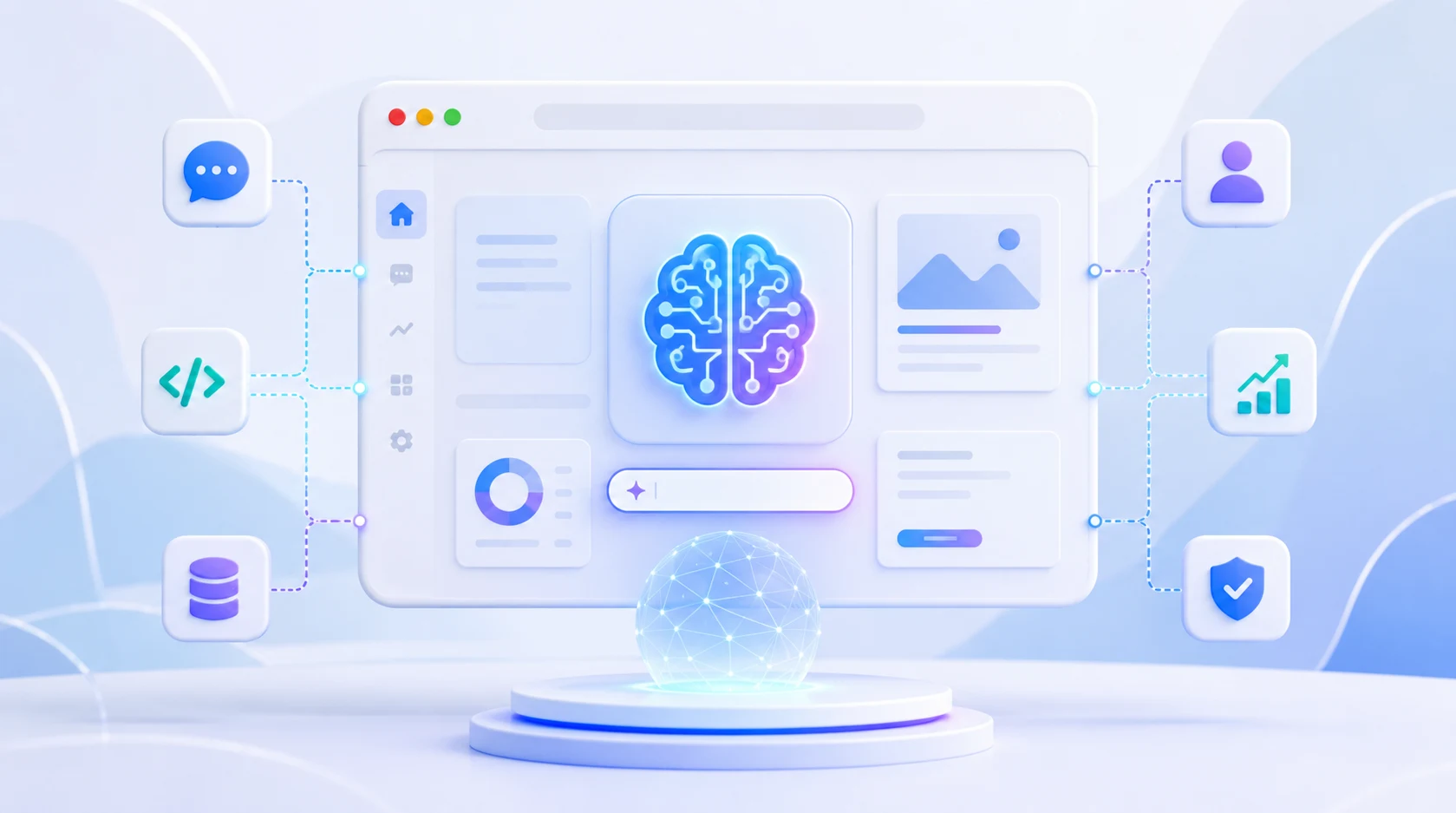
An AI-native application is designed from the ground up around a language model or intelligent agent as its core engine, rather than treating AI as an optional module. Key characteristics include:

  • Natural language as the primary interface — instead of clicking through rigid menus, users describe what they want in plain language.
  • Dynamic, generative UI — interfaces that assemble themselves in real time based on user intent, rather than following a fixed set of pre-built screens.
  • Context-aware memory — the app remembers user preferences, past interactions, and goals across sessions.
  • Agentic workflows — the application can take multi-step actions on a user’s behalf (booking, drafting, researching, coding) instead of just responding to single queries.
  • Continuous learning loops — the product improves through usage data and feedback, not just scheduled software updates.

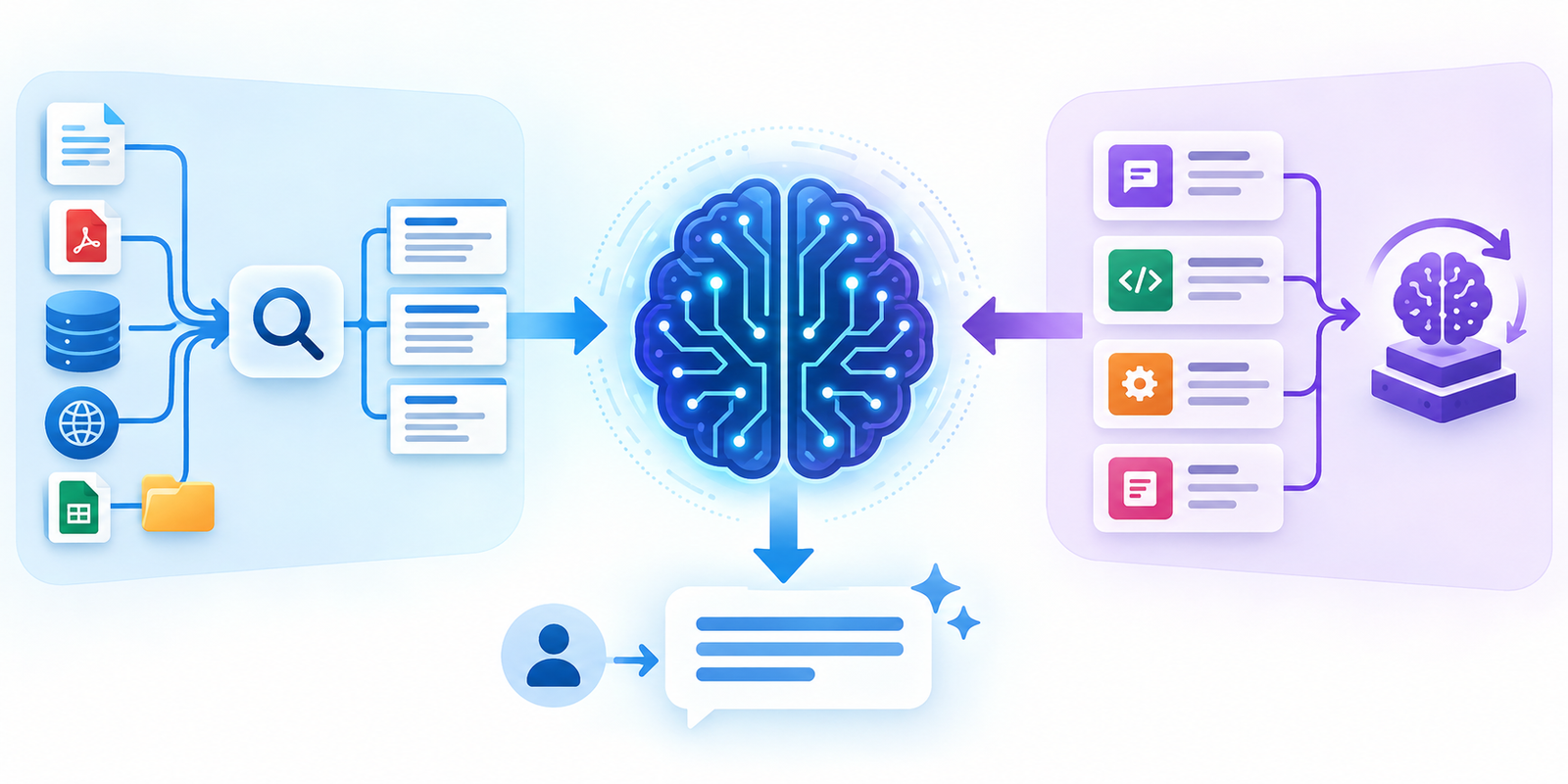
This loop is what allows agents to handle open-ended, multi-step problems instead of just single-shot responses. For example, an agent asked to “research competitor pricing and draft a summary” would perceive the request, plan a sequence of searches, act by querying the web, observe the results, and loop back to refine its search before finally drafting the summary.

In short: traditional apps have workflows with AI features attached. AI-native apps have AI as the workflow.

3. AI-Native vs. Traditional Web Applications

Aspect Traditional AI / Chatbot Agentic AI
Interaction Single-turn Q&A Multi-step, goal-driven
Action Generates text only Takes real actions via tools/APIs
Planning None — reacts to each prompt Plans and sequences sub-tasks
Autonomy Fully human-directed Operates with defined independence
Memory Often stateless Maintains context across steps/sessions
Error Handling Requires human correction Can self-correct within guardrails

This distinction is the core reason Agentic AI is treated as a separate category rather than just "a smarter chatbot."

4. Why This Shift Is Happening Now

Several forces are converging to make AI-native applications viable at scale:

  1. Model capability and cost curves — large language models have become dramatically cheaper and faster to run, making real-time AI reasoning economically feasible for everyday apps.
  2. Agentic frameworks and tool-use — models can now reliably call APIs, browse the web, and execute multi-step tasks, turning them from “answer machines” into functional software agents.
  3. User expectations have changed — after two years of chat-based interfaces, users increasingly expect to ask for what they want rather than navigate to it.
  4. New infrastructure — vector databases, retrieval-augmented generation (RAG), and orchestration frameworks have matured into production-grade building blocks.

5. Core Technologies Powering AI-Native Apps

Behind every AI-native product sits a stack of supporting technologies working together:

  • Large language models (LLMs) as the reasoning core.
  • Retrieval-augmented generation (RAG) to ground responses in accurate, up-to-date data.
  • Vector databases for fast semantic search over unstructured content.
  • Agent orchestration frameworks that manage multi-step tasks, tool calls, and error recovery.
  • Function/tool-calling APIs that let models take real actions — booking, querying databases, sending emails.
  • Streaming and generative UI layers that render interface elements dynamically as the model responds.

Understanding this stack matters because it’s now as foundational to modern web development as databases and REST APIs were in the previous era.

6. Real-World Examples of AI-Native Web Apps

  • AI-first coding tools that generate, test, and deploy entire application scaffolds from a natural-language product description.
  • Adaptive productivity suites that draft documents, summarize meetings, and reorganize your workspace based on inferred priorities.
  • Generative commerce platforms where the storefront itself is assembled per-user based on browsing intent, rather than served from a static template.
  • Autonomous customer-support agents that resolve tickets end-to-end, including taking account actions, not just answering FAQs.

7. Benefits of AI-Native Architecture

  • Faster time-to-value for users, since the app adapts to intent instead of requiring users to learn its structure.
  • Lower development overhead for certain features, as generative components can replace large amounts of hard-coded UI logic.
  • Personalization at scale without needing separate rules engines for every segment.
  • Continuous improvement driven by usage patterns rather than manual redesign cycles.

8. The Challenges Developers Should Watch For

AI-native doesn’t mean AI-only, and the transition brings real engineering and product challenges:

  • Reliability and hallucination risk — generative interfaces and agentic actions need strong guardrails, especially when they trigger real-world effects like payments or emails.
  • Latency — real-time model inference can be slower than static UI rendering, requiring careful UX design around loading states.
  • Cost management — inference costs scale with usage in a way traditional compute often doesn’t.
  • Security and data privacy — context-aware memory means these apps often hold more sensitive user data, raising the stakes for proper access control.
  • Design consistency — when interfaces are generated dynamically, maintaining a coherent brand and usability standard is harder than shipping fixed screens.

9. Best Practices for Building AI-Native Products

For teams starting this transition, a few principles help avoid common pitfalls:

  • Design guardrails before capabilities — define what the agent is not allowed to do before expanding what it can do.
  • Keep humans in the loop for high-stakes actions — especially payments, deletions, or irreversible changes.
  • Cache and ground responses with RAG to reduce hallucination and inference cost.
  • Instrument everything — usage logs and feedback loops are what let AI-native products actually improve over time.
  • Treat prompts and policies as versioned artifacts, just like code, with testing and rollback plans.

10. What This Means for the Future of Web Development

The rise of AI-native web applications signals a broader shift in how software gets built and used:

  • Product teams will increasingly define behavior through prompts, policies, and examples rather than exhaustive UI specs.
  • Frontend development will blend traditional component libraries with generative, model-driven rendering.
  • Backend architecture will need to support agent orchestration, tool-calling, and retrieval pipelines as first-class citizens, not side projects.
  • Competitive advantage will shift toward who can build the most reliable, context-aware, and trustworthy AI experiences — not just who has access to the biggest model.

11. Conclusion

AI-native web applications aren’t a passing trend — they represent a structural shift in how software is designed, built, and experienced. As models get faster, cheaper, and more capable of taking real action, the gap between “an app with AI” and “an app built on AI” will only widen. Businesses and developers who start designing with an AI-native mindset today will be far better positioned for the next generation of the web.

Neha is a web technology enthusiast and content contributor at AssaptR, specializing in software development, custom web solutions, eCommerce, and digital marketing. Her articles focus on the latest industry trends, best practices, and actionable strategies that help businesses build secure, scalable, and high-performing digital products.

Building innovative digital solutions that help businesses grow. Turning ideas into scalable technology and lasting success.