
- Services
- Services
-
- Hire a Team
-
- Industry
- Company
- Company
-
- Case Study

You have an app idea, a budget, and a deadline. Now you need a team that can deliver. That choice shapes your app’s quality, your launch date, and your costs for years.
A strong React Native development company turns your idea into a fast, stable iOS and Android app from one codebase. A weak one leaves you with bugs, missed deadlines, and code you cannot maintain. That is why the selection process matters as much as the app itself.
This guide helps you compare agencies with confidence. Non-technical founders get plain-language checks. Technical leads get deeper questions to ask. As a result, your whole team can judge each proposal fairly.
Quick answer: To choose a React Native development company, look for proven live apps, TypeScript and New Architecture skills, a clear testing and release process, strong security habits, transparent pricing, and full code ownership. Then start with a paid discovery phase or pilot before you sign a large contract.

A React Native development company designs, builds, launches, and maintains mobile apps using the React Native framework. One team writes mostly shared code, and the app runs on both iPhone and Android.
A full-service partner typically handles:
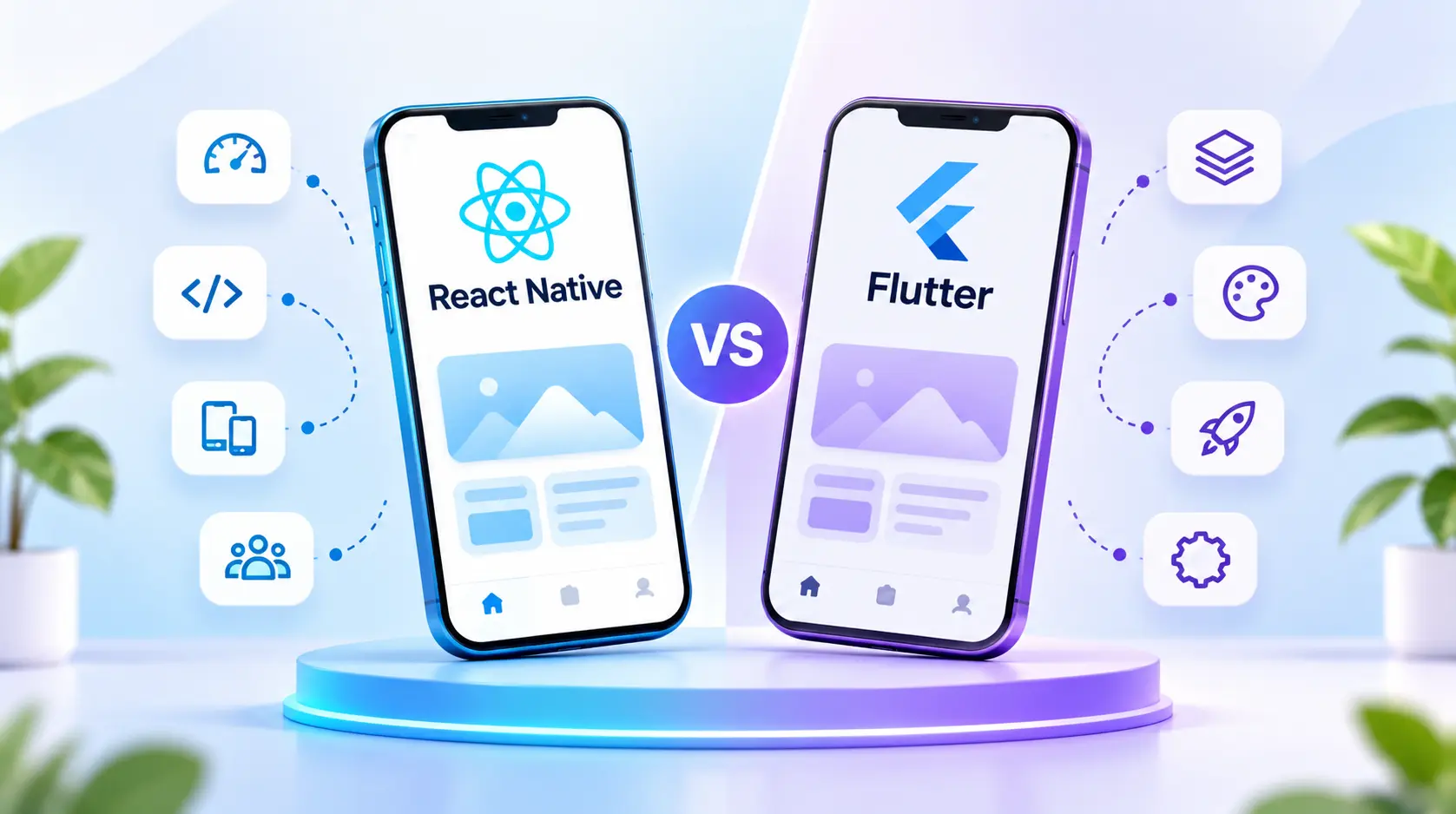
In plain terms, the agency is your architect, builder, and inspector in one. If you want to compare React Native with other options first, read our guide on React Native vs Flutter.
Learn more about AssaptR’s Mobile App development services.
Before you shortlist agencies, confirm that an agency is the right model. Each option fits a different situation.
| Option | Best for | Main risk |
|---|---|---|
| Agency | Full products that need design, development, QA, and PM | Higher hourly cost |
| Freelancer | Small, well-defined tasks | Single point of failure |
| In-house team | Long-term core products | Slow, expensive hiring |
Rates tell part of the story. One September 2026 benchmark puts mid-level US freelance rates at $108 to $165 per hour, while US agency rates run $205 to $340. However, the cheapest option is not always the cheapest outcome. A cheaper freelancer who needs two extra weeks can cost more than a pricier agency if you miss a seasonal launch window.
Agencies make the most sense when you need a complete team and predictable delivery. If you only need extra hands, you can explore our hire talent options or hire NextJS developers from the React ecosystem.
Agencies can only quote accurately when your brief is clear. A vague brief leads to vague proposals and surprise costs.
For business owners: Prepare short answers to these questions:
For technical leads: Add your existing backend, API status, expected user numbers, offline needs, and compliance requirements.
Even a two-page brief helps. It also tests the agency, because strong partners respond with smart questions. For help planning features, costs, and store submission, see our guide on how to build an eCommerce mobile app.
Not every web agency can build good mobile apps. Look for teams that specialize in React Native, not teams that only list it as a service.
A company that focuses specifically on React Native is the best-case scenario, because it signals they know what they are doing and have a worked-out process. Also check for these skills: pagepro
Ask how they handle native module bridging and performance on low-end Android devices. A confident team answers with examples. A weak team answers with buzzwords.
React Native changed a lot recently. Agencies with stale knowledge will build apps that age poorly. Therefore, test their current expertise.
Ask how they handle the New Architecture on new projects, what their over-the-air update discipline looks like, and where they draw the line between JavaScript and native modules. Good answers include:
In addition, ask how they handle upgrades. Apps need regular React Native version updates. An agency that plans upgrades keeps your app secure and compatible.
Proof beats promises. So look for evidence, not slide decks.
Verify Real Shipped Work
Vet shipped work, not portfolios. Look for App Store links to React Native apps that are still live and recently updated. Download two or three of their apps. Check speed, smoothness, and reviews. You can also review our own case studies to see what strong proof looks like.
Call Real References
Ask for two or three client references, and speak with them directly. Useful questions include:
Also look for industry fit. A team that knows retail, finance, or healthcare already understands the rules and risks in those fields.
Mature agencies follow a clear process. This is where good teams separate from average ones.
Ask whether the company uses essential tools such as ESLint, Prettier, and TypeScript, and ask about their CI/CD setup. Clean code and automated pipelines mean safer releases and easier handovers.
Ask about their testing methods, including unit testing, integration testing, and user acceptance testing. Also check that they test on real devices, not only simulators. Real phones reveal problems that emulators hide.
Strong teams show clickable prototypes before development begins. This catches confusing flows early and saves money. In addition, ask whether designers and developers work together from the start.
Look for regular demos every one to two weeks. Seeing working software often keeps everyone honest. Moreover, confirm that the agency manages App Store and Google Play submissions, because rejected apps can add days or weeks.
Your app will handle user accounts, payments, and personal data. So security must be built in from the start.
Ask each agency about:
Then confirm ownership. Your contract should state that you own the source code, designs, and developer accounts. Also insist that the App Store and Google Play accounts are created under your company name, not the agency’s. If a vendor avoids this topic, treat it as a warning sign.
Many projects fail because of poor communication, not poor code. So judge how an agency communicates before you sign.
Notice these early signals:
Ask who will actually write your code. Some agencies pitch with senior experts, then assign junior staff. Request short profiles of the real team. If you plan to work across time zones, our guide to offshore software development explains how to make distributed teams work.
Price matters, but the lowest quote often hides extra costs. So compare the full picture.
What Rates Look Like
Rates vary by region. One 2026 guide lists North America at $120 to $150 per hour, Eastern Europe at $30 to $80, and Asia at $20 to $90. Another report says senior rates in Eastern Europe and Latin America land 40 to 60 percent below US benchmarks without a matching drop in quality. Sources differ widely, so always ask for a written estimate.
What Projects Cost
One guide estimates a basic MVP at $20,000 to $40,000, a mid-level app at $40,000 to $80,000, and a complex or enterprise app at $80,000 to $250,000 or more. These figures are ballparks. Your scope, design, and integrations decide the real price.
Agencies usually offer three models:
Ask whether quotes include discovery, design, backend work, QA, project management, store fees, cloud hosting, push services, and post-launch support. If two quotes differ widely, one of them probably misunderstood your scope.
For a deeper guide to vendor pricing and contracts, read our article on how to choose a backend development company. It covers the same engagement models in detail.
Launch is the start of your relationship, not the end. Your app needs updates, monitoring, and security patches for years.
Before signing, confirm these points:
Strong handover terms protect you from lock-in. In short, you should always be able to take your app elsewhere.
Rate each agency from 1 to 5, then multiply by the weight.
| Criteria | What good looks like | Suggested weight |
|---|---|---|
| React Native and TypeScript expertise | Specialized team, current New Architecture knowledge | 25% |
| Live apps and references | Shipped, recent apps with happy clients | 20% |
| Process and QA | CI/CD, automated tests, real-device testing, regular demos | 15% |
| Security and compliance | Clear policies, secure storage, compliance experience | 15% |
| Communication and team clarity | Fast replies, honest risk flags, named team | 10% |
| Pricing clarity | Itemized estimate with stated assumptions | 10% |
| Support and handover | Warranty, docs, code ownership | 5% |
Rates vary by region, experience, and project type. Fixed-price projects depend on scope, so request a detailed quote.
A simple MVP can take two to three months. A typical business app often takes three to five months. Complex apps with many integrations take longer. A discovery phase gives you a realistic timeline.
It depends on your team and goals. React Native suits teams with React skills and quick hiring needs. Flutter suits custom, animation-heavy designs. Our comparison of React Native vs Flutter explains the trade-offs.
Many can, and it often helps. One team can align your app, API, and website. For example, our custom web development services and Next.js development services pair well with mobile projects. If you use an online store platform, see our Shopify development services.
You should. Create the developer accounts under your company name and add the agency as a team member. This protects your app if the relationship ends.
Yes, if you plan for it. Insist on code ownership, documentation, repository access, and your own store accounts. These steps make any handover much smoother.
The right React Native development company combines technical depth, honest communication, and reliable support. Define your scope first. Then verify live apps, check current React Native skills, compare pricing carefully, and confirm security and ownership terms. Finally, test the relationship with a small paid pilot.
A good partner does more than write code. They challenge weak ideas, flag risks early, and build an app that grows with your business.
AssaptR builds fast, scalable digital products for growing brands. Explore our custom web development services, compare frameworks with our guide to React vs Vue, contact our team, or schedule a free call to discuss your app.
Neha is a web technology enthusiast and content contributor at AssaptR, specializing in software development, custom web solutions, eCommerce, and digital marketing. Her articles focus on the latest industry trends, best practices, and actionable strategies that help businesses build secure, scalable, and high-performing digital products.
2. What Does a React Native Development Company Do?
3. Agency, Freelancer, or In-House Team?
4. Define Your App Goals and Scope Before You Shortlist
5. Check React Native and TypeScript Expertise
6. Ask About the New Architecture, Expo, and Native Modules
7. Review Portfolio, Live Apps, and References
8. Evaluate Design, QA, and Release Process
9. Check Security, Compliance, and Data Ownership
10. Assess Communication, Team Structure, and Time Zones
11. Compare Pricing Models and Hidden Costs
12. Contract, Support, and Handover Terms
13. React Native Development Company Evaluation Scorecard

WhatsApp us