
- Services
- Services
-
- Hire a Team
-
- Industry
- Company
- Company
-
- Case Study

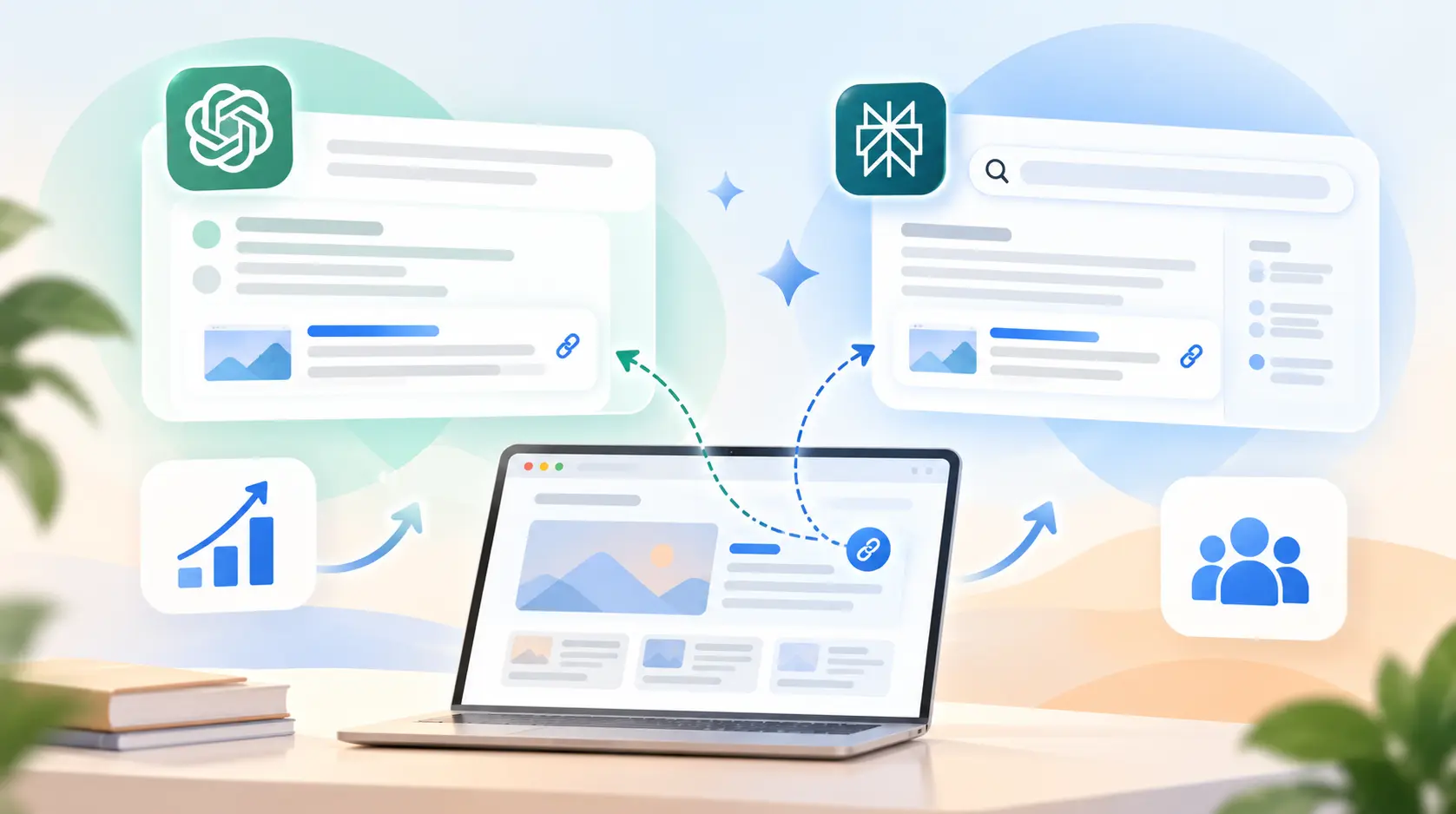
Do you want to get cited by ChatGPT and Perplexity? You are not alone. More people now ask AI tools instead of searching on Google. As a result, brands that appear in AI answers gain trust, clicks, and sales.
In this guide, you will learn how to get cited by ChatGPT and Perplexity step by step. We will cover answer engine optimization (AEO) and generative engine optimization (GEO). Each tip is simple, practical, and ready to use on your own website.
AEO stands for answer engine optimization. It means shaping your content so that tools give your answer to a question. GEO stands for generative engine optimization. It means making your site easy for AI models to find, trust, and quote.
Both ideas share one goal. You want AI tools to pick your page as a source. In short, SEO helps you rank. AEO and GEO help you get quoted.
Learn more about AssaptR’s Shopify development services.
AI search changes how people find information. Users get a direct answer, and they often see only a few linked sources. Therefore, being one of those sources puts your brand in front of ready-to-act readers.
Citations also build authority. When an AI tool names your site, readers see your brand as a trusted voice. Moreover, these visitors often arrive with a clear need, so they convert well.
First, make sure AI bots can read your pages. Many sites block them by accident. Check your robots.txt file and allow the main search crawlers.
User-agent: OAI-SearchBot
Allow: /

User-agent: PerplexityBot
Allow: /
In addition, keep your key content in plain HTML. Some bots struggle with pages that load text only through JavaScript. Our technical SEO services include checks for this. Also, check that your pages are indexed in Bing, because ChatGPT search draws on it.
One note on llms.txt files. They are easy to add, but no major AI company has confirmed that it uses them. Explore our large language model services to see how AI tools process web content. Treat llms.txt as optional.
AI tools love clear, direct answers. So, start each section with the answer. Then add detail after it. For hands-on help, work with an SEO expert.
Here is a simple method to follow:
This format makes your text easy to lift into an AI answer. Furthermore, it helps human readers scan your page fast.
Schema markup tells machines what your page means. Use it to label your content clearly. If you use Yoast SEO, much of this is built in. Our custom web development team can also add it for you.
Focus on these schema types:
As a result, AI systems can link your content to a real brand and a real expert.
AI tools prefer sources they can trust. Therefore, show who you are and why you know the topic. Add an author name, a short bio, and credentials to every post. Link each author name to an author page, and show proof with your case studies.
Next, share original value. For example, publish your own data, case studies, or tests. Unique facts are far more likely to be quoted than generic advice. Likewise, link to reliable sources when you make a claim.Step 4: Show Real Expertise and Trust
AI tools do not rely on your site alone. They also learn from the wider web. So, build a presence in other places too. Real client testimonials are a good start, and our digital marketing services can help you grow further.
Try these ideas:
When many trusted sources mention your brand in the same way, AI tools gain confidence in you.
AI answers favor current information. Therefore, update your best pages often. Add new facts, fix old links, and show the “last updated” date. You can see fresh examples on the AssaptR blog.
Also, mention the year where it fits, such as “in 2026”. However, only change the date when you truly improve the page. Fake updates can hurt trust.
Good technical health helps both bots and people. Make sure your site loads fast and works well on mobile. Our responsive web design services can help with both. Also, use a clean heading structure, with one H1 and logical H2 and H3 tags.
Furthermore, add descriptive alt text to images and use internal links to connect related posts. A tidy site is simply easier for any crawler to understand.
Internal links connect your pages to each other. They show AI crawlers which pages matter and how your topics relate. As a result, a strong link structure helps you get cited by ChatGPT and Perplexity more often.
Internal links also help people. Readers who find related answers stay longer and trust you more. Below, you will find one simple method for beginners and one deeper checklist for developers.
You do not need any code. Follow these five steps in WordPress or any similar editor.
Also, follow these simple writing rules:
If you use Yoast SEO, check its internal linking suggestions in the editor sidebar. They show related pages you can link to in seconds.
Crawlers read your HTML, not your design. Therefore, build links that bots can follow without running scripts.
<a href="..."> links. Avoid links that work only through JavaScript click events.Here is a clean example:
<p>Read about our <a href="https://assaptr.com/digital-marketing-services/search-engine-optimization-services/">search engine optimization services</a> to learn more.</p>You cannot improve what you do not measure. First, test your key questions by hand in ChatGPT and Perplexity. Note whether your site appears as a source.
Then, check your analytics for visits from chatgpt.com and perplexity.ai. Our conversion rate optimization services help turn those visits into leads. Finally, repeat the test each month. Over time, you will see which pages earn citations and which need work.
It varies. Some pages appear within weeks, while others take months. Strong, original, well-structured content usually speeds things up.
No. GEO builds on SEO. Good rankings, fast pages, and quality content still matter because AI tools often pull from top search results.
No. Citations are earned through relevance, quality, and trust, not through payment.
To get cited by ChatGPT and Perplexity, focus on clarity, trust, and access. Let AI bots crawl your site. Write direct answers. Add schema, show real expertise, earn outside mentions, and keep pages fresh.
Start today with one important page. Rewrite it with an answer-first structure, add schema, and update it. Then repeat the process across your site. Small steps, done consistently, will help your brand get cited by ChatGPT and Perplexity throughout 2026.
Neha is a web technology enthusiast and content contributor at AssaptR, specializing in software development, custom web solutions, eCommerce, and digital marketing. Her articles focus on the latest industry trends, best practices, and actionable strategies that help businesses build secure, scalable, and high-performing digital products.
WhatsApp us