
- Services
- Services
-
- Hire a Team
- Industry
- Company
- Company
-
- Case Study

For the past decade, “adding AI” to a web application meant bolting on a chatbot widget or a recommendation engine after the core product was already built. That era is over. A new category of software — AI-native web applications — is emerging, where artificial intelligence isn’t a feature sprinkled on top but the foundational layer the entire product is built around.
This shift is as significant as the move from desktop software to the cloud, or from static websites to single-page applications. In this post, we’ll break down what AI-native web apps actually are, why they’re rising so fast, how they differ from traditional apps, real-world examples, and what it means for developers and businesses building for the web today.
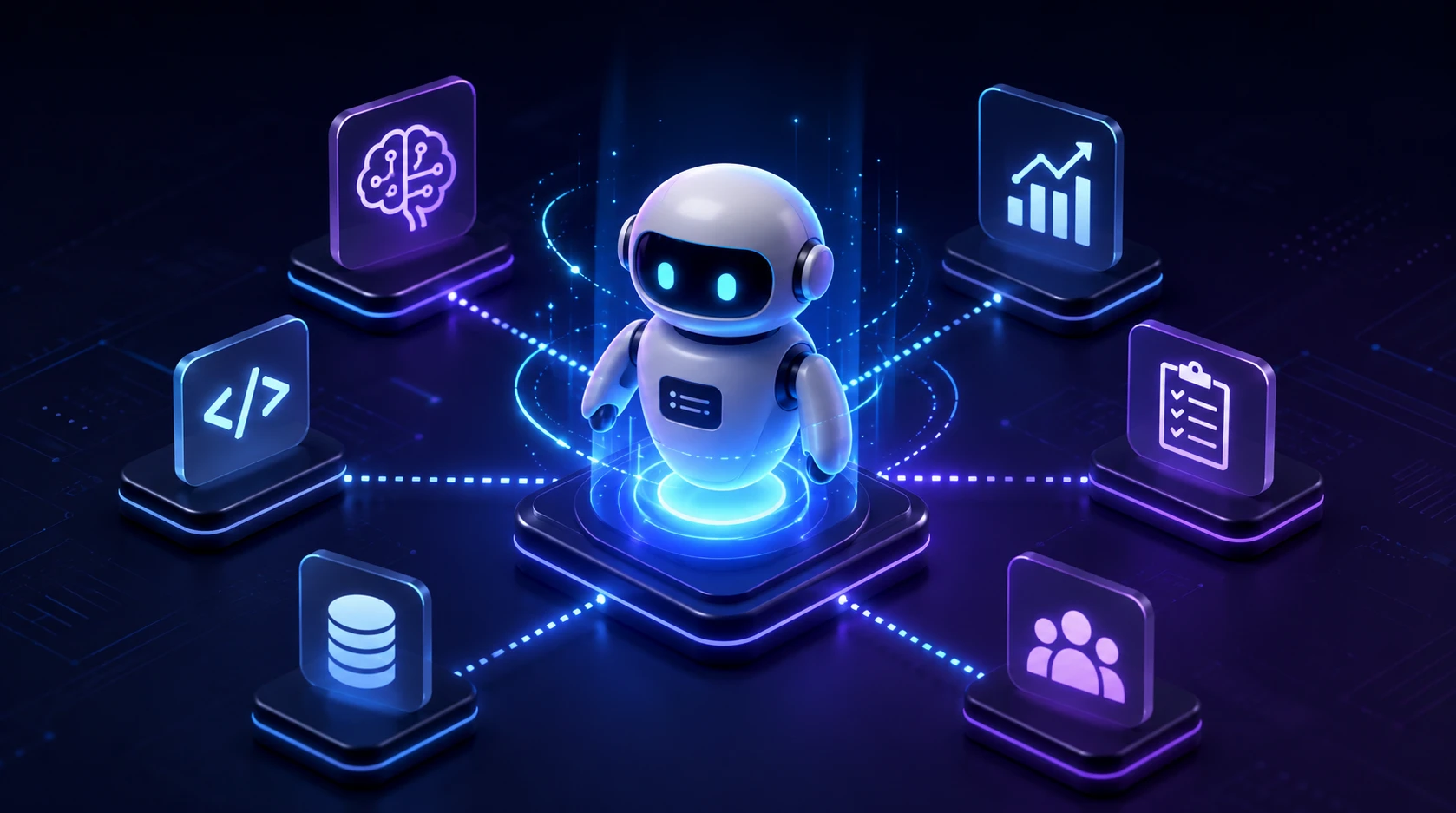
An AI-native application is designed from the ground up around a language model or intelligent agent as its core engine, rather than treating AI as an optional module. Key characteristics include:
This loop is what allows agents to handle open-ended, multi-step problems instead of just single-shot responses. For example, an agent asked to “research competitor pricing and draft a summary” would perceive the request, plan a sequence of searches, act by querying the web, observe the results, and loop back to refine its search before finally drafting the summary.
In short: traditional apps have workflows with AI features attached. AI-native apps have AI as the workflow.
| Aspect | Traditional AI / Chatbot | Agentic AI |
|---|---|---|
| Interaction | Single-turn Q&A | Multi-step, goal-driven |
| Action | Generates text only | Takes real actions via tools/APIs |
| Planning | None — reacts to each prompt | Plans and sequences sub-tasks |
| Autonomy | Fully human-directed | Operates with defined independence |
| Memory | Often stateless | Maintains context across steps/sessions |
| Error Handling | Requires human correction | Can self-correct within guardrails |
This distinction is the core reason Agentic AI is treated as a separate category rather than just "a smarter chatbot."
Several forces are converging to make AI-native applications viable at scale:
Behind every AI-native product sits a stack of supporting technologies working together:
Understanding this stack matters because it’s now as foundational to modern web development as databases and REST APIs were in the previous era.
AI-native doesn’t mean AI-only, and the transition brings real engineering and product challenges:
For teams starting this transition, a few principles help avoid common pitfalls:
The rise of AI-native web applications signals a broader shift in how software gets built and used:
AI-native web applications aren’t a passing trend — they represent a structural shift in how software is designed, built, and experienced. As models get faster, cheaper, and more capable of taking real action, the gap between “an app with AI” and “an app built on AI” will only widen. Businesses and developers who start designing with an AI-native mindset today will be far better positioned for the next generation of the web.
Neha is a web technology enthusiast and content contributor at AssaptR, specializing in software development, custom web solutions, eCommerce, and digital marketing. Her articles focus on the latest industry trends, best practices, and actionable strategies that help businesses build secure, scalable, and high-performing digital products.
2. What Makes a Web App “AI-Native”?
3. AI-Native vs. Traditional Web Applications
4. Why This Shift Is Happening Now
5. Core Technologies Powering AI-Native Apps
6. Real-World Examples of AI-Native Web Apps
7. Benefits of AI-Native Architecture
8. The Challenges Developers Should Watch For
9. Best Practices for Building AI-Native Products
WhatsApp us